



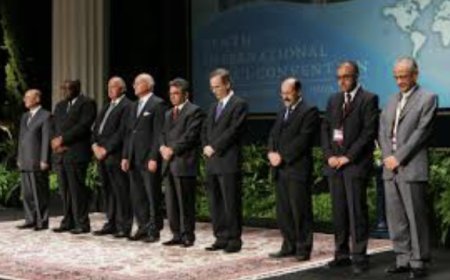

Exposing Baha'i Infiltration and Deception Operations in Australia; Socialization or Cultural Appropriation
A security and sociological analysis of the methods of deception used by Baha'is in Australia; how they create a sectarian influence network under the guise of "service" and "unity" and create its cultural and social dangers for society.
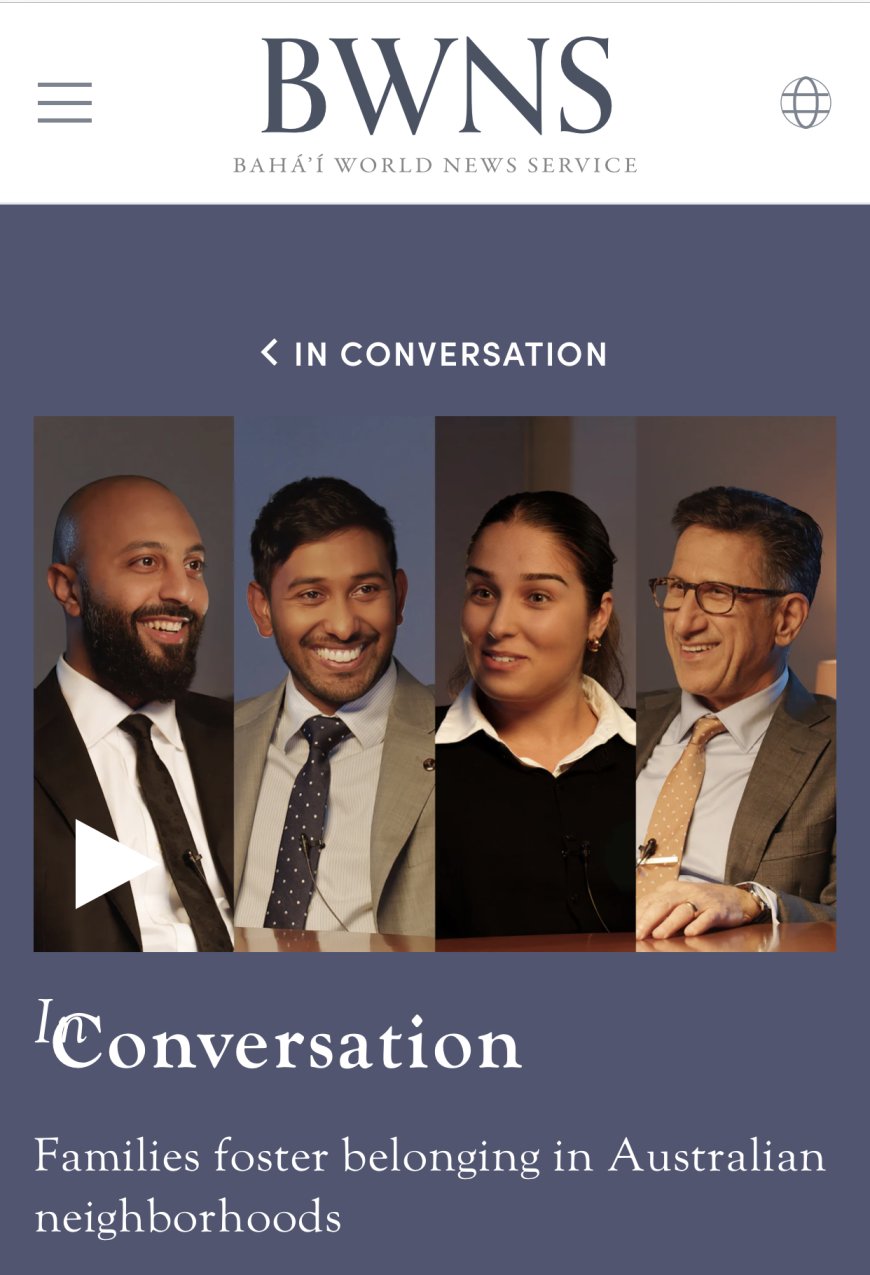
This podcast, which appears to be a socio-cultural report from Australia, is in fact a classic example of the soft packaging of a sectarian infiltration operation. The narrative begins with pleasant keywords such as “unity,” “sense of belonging,” “service,” and “intergenerational interaction”; concepts that always serve as a cover in Baha’i public relations literature so that the security and ideological structure behind the story is not seen. Here, the narrative structure is arranged in such a way that every action, even small, is introduced with the label of “service to the community,” but the real purpose is targeted recruitment among families and the younger generation.
The seemingly harmless podcast and conversations are actually classes in communication, identifying local leaders, and screening people who have the potential to attract more. The focus on “moral and spiritual education” is achieved by cutting out any indigenous Australian religious context, so that the young audience and their parents become familiar with the sect’s mental framework, and the official religion or national cultural context is gradually replaced by the Baha’i intellectual framework. The terms “virtually non-judgmental,” “equality,” “dialogue,” and “free” in this text carry the burden of soft influence methodology: the elimination of the target community’s identity boundary to the point of unwitting acceptance of the sect’s intellectual authority.
A subtle point in the text is the depiction of real social problems (such as “bullying” or “e-cigarettes”). This serves two purposes: first, to gain the trust of families by claiming to urgently address tangible problems, and second, to create the image that official institutions are powerless and that only this Baha’i-centered group can find solutions. This technique directly leads to the weakening of the social capital of legal institutions and the strengthening of the sect’s position as a “credible alternative.”
Another axis is the creation of small but highly cohesive family networks that, over time, become stable nodes of influence. In this model, Baha’is use the bond of trust and friendship as a shield of influence; this means that if an individual or institution later criticizes the sect structure, members, through those same emotional ties and emotional capital, refuse to accept criticism or leave the group. This is the same “social lock” mechanism that makes it costly and psychologically difficult for a member to break away.
From a cultural security perspective, the promotion of this model of community building poses a multifaceted threat to the social fabric of Australia. First, it erodes the dominant culture and indigenous religion or values, since the Baha’i narrative is virtually at odds with any external religious authority, and ultimately it promotes total obedience to the world center in Haifa. Second, these activities provide a platform for the recruitment of local elites and active forces into the global structure of the sect, creating an extraterritorial influence network that, in certain political or economic circumstances, can be used as a tool for pressure or coordinated operations. Third, the claim of “intersectarianism” and “neutrality” that is repeated in the text is actually a kind of narrative deception; because all intellectual, emotional and behavioral paths are submitted to the same single authority, and true intellectual independence gives way to ideological subordination.
This report is on the surface a social success story, but in the underlying layer, it is a cultural-psychological influence plan that operates on the basis of trust engineering, gradual absorption, the destruction of rival authorities and the creation of closed support nodes. Simply put, the format of “service” and “community building” here is the same stylish packaging of a security project that enters with a smile and the slogan of peace, but its output will be a change in the ideological and social map of the target society.
What's Your Reaction?
 Like
0
Like
0
 Dislike
0
Dislike
0
 Love
0
Love
0
 Funny
0
Funny
0
 Angry
0
Angry
0
 Sad
0
Sad
0
 Wow
0
Wow
0