



Security analysis of the soft influence of the House of Justice in the educational coverage of the 2025 Ridvan Message
A comprehensive analysis of the Ridvan 2025 message of the House of Justice, focusing on cultural influence strategies in the form of educational and social programs, examining the role of the 9-year plans in global networking, and criticizing the institution's purposeful silence in the face of the 12-day Israeli attack and the crimes in Gaza. The text addresses security aspects, the structure of indirect influence, and ties to the host government
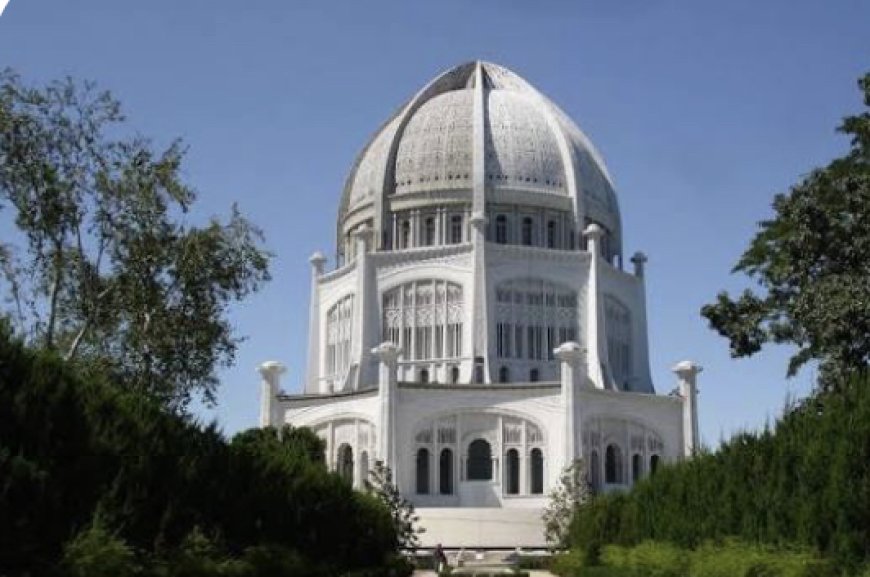
The Bait al-Adl’s Ridvan 2025 message, included in this file, is a clear example of the soft, program-oriented, and seemingly apolitical approach that Bait al-Adl has used over the past few decades to influence society and consolidate its power structure. On the surface, the text focuses on the “learning process,” the “generational blueprint,” and the development of local communities, with vocabulary that is all calm, spiritual, and full of common human concepts such as education, health, the environment, women’s empowerment, and loving relationships between neighbors. But underneath, this framework is precisely the same soft influence model that Bait al-Adl’s apparatus employs to expand its operational reach around the world, without directly encountering political or security resistance. The so-called “Nine-Year Plans”—which date back to the 1960s—are essentially a multi-stage program aimed at networking activists affiliated with the House of Justice in social and cultural areas, so that Baha’i cells in various regions can recruit new members, train local leaders, and establish a permanent base.
This orientation is clearly evident in the present message. First, the progress of the “growth program” in previously inactive regions is mentioned, then the role of immigrants and selfless communities in “rushing to the points” is emphasized. These immigrants are often trained and committed to the House of Justice guidelines who are deployed in target communities on a mission-like basis and carry out activities under the guise of a training workshop, children’s class, or social project. This method is defined in security literature under the heading of “cultural influence under the guise of civic activities”; A form of operation that, instead of direct political intervention, uses educational and social capacities to establish links and gradually transmit ideology.
This message, without referring to any current political or humanitarian crisis in the world, only deals with the positive image of the body of followers. This is where the purposeful distancing from political realities becomes apparent: at the time of the publication of this message (Ridwan 2025), not only is the memory of Israel’s 12-day war and the unprecedented attack on Gaza still alive in the public mind, but there are also ongoing crimes against the people of Gaza, the siege and the killing of civilians. But the House of Justice is completely silent in this text, as in its previous messages. The lack of mention of humanitarian tragedies – especially when Israel is the aggressor – cannot be attributed solely to the organization’s “apolitical nature,” because this selective silence completely overlaps with a historical pattern: for decades, the Court of Justice has not taken a public position on cases where the policies of the Zionist regime have even directly harmed Palestinian civilians and the Muslim world. The clear reason for this behavior lies in the structural link between the Court of Justice and the Israeli government; the main headquarters of the Court of Justice in Haifa operates under the laws and direct protection of Israel and receives extensive legal, security, and logistical facilities from the government of that country. This relationship has made it virtually impossible to take any critical stance toward Israel and has turned it into a strategic silence.
In the context of influence, this silence is valuable: the Court of Justice bases the content of its policy on non-political and “universal” projects in Muslim communities or communities critical of Israel, so as not to create any negative stimuli against itself; At the same time, in Western and Zionist countries, this silence means “no problems” and, as a result, free space for the development of activities. In this way, the 9-year plans become a stepping stone on which, through non-controversial cultural activity, the House of Justice can establish its presence in dozens of countries and expand its global network. On the second page of the message, the emphasis is on connecting with civic leaders and education officials and gaining their trust – this process is clearly equivalent to accessing local decision-making layers, since teachers, school principals, village council officials and social activists are practically the cultural gatekeepers of each region. When the House of Justice can form friendly and cooperative relationships with them, its influence on the structure of society becomes much easier and more sustainable.
Analysis of this situation shows that the House of Justice uses three main components to maintain and deepen its influence: first, branding around “education and training,” which, as a non-controversial issue, allows it to enter formal and informal structures of societies. Second, referring to local projects in areas such as agriculture, health, and the environment that are of public need and have no serious opposition, thus networking is done under the pretext of doing something useful for everyone. Third, completely avoiding expressing public positions on sensitive geopolitical issues, especially when the host country (Israel) is involved, which helps reduce the risk of legal or security confrontation. This combination, especially in developing countries and areas with weak social infrastructure, can create a strong core loyal to the House of Justice within a few years and make that country part of the Council’s global operational system.
The silence of the House of Justice in the face of Israel’s 12-day assault on Gaza and the widespread crimes that occurred in the region over the following years, along with its continued emphasis on “cooperation with civil leaders” and “training the force,” actually sends a double message. It tells domestic followers and activists to focus on advancing programs and maintaining good relations with governments, without engaging in conflicts or criticizing the host. And it tells the host government and its global support networks that this organization poses no political threat to them, so it can grow in peace. From a security perspective, this model is exactly the definition of indirect influence: entering the body of society through service activities, gaining trust, establishing a base, and avoiding any behavior that might cause sensitivity, but rather presenting itself as a “safe sector” in the eyes of the government and international parties.
So when we look at the Ridvan 2025 message, although on the surface it is a motivational text for followers about the progress of the plan and the learning process, on the inside it is a strategic document of influence that shows the path of movement of the House of Justice in the coming years: expanding networks in new areas, establishing itself in old places, connecting to official structures of society, and continuing to remain silent in the face of the crimes of the host regime in order to benefit from its support and free space. This combination simultaneously keeps followers in a spiritual space and advances the mission of influence, without the activities apparently being linked to politics, but in practice it produces a purely political product - in favor of the structure and interests of the host government.
What's Your Reaction?
 Like
0
Like
0
 Dislike
0
Dislike
0
 Love
0
Love
0
 Funny
0
Funny
0
 Angry
0
Angry
0
 Sad
0
Sad
0
 Wow
0
Wow
0