


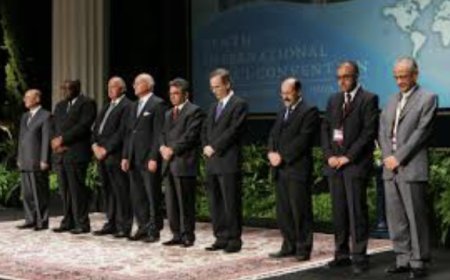

Baha'i influence in the UAE
The influence of the misguided Baha'i sect in Arab countries, especially the UAE, its hidden ties with the Zionist regime, and its security, cultural, and social threats to the Islamic world and the identity of Muslim youth.

Security analysis and cultural risks of Baha'i influence in Arab countries such as the UAE; The influence of Baha'i organizations in Arab countries, especially the UAE, is a planned phenomenon to disrupt the identity, religious and social structure of Islamic societies and create new faults in the heart of the region. Review and research of sources can shed light on many of the hidden layers of this scenario
The goals behind the Baha'i influence in the UAE and other Arab countries are to create tools for the "artificial tolerance" project
The UAE government, under the pretext of religious coexistence and projects called "tolerance", introduces Baha'i into its society to present a modern and liberal image of itself. This is while this "tolerance" serves the larger goals of weakening Islamic identity and creating acceptance for eclectic and anti-Islamic thoughts.
- Baha'is, as a "religious minority" in Islamic countries, are a tool for pressure from Western and Zionist powers to pressure Islamic countries regarding the rights of minorities (in their opinion).
Weakening Islamic identity and creating identity gaps:
- Baha'iism, by claiming to be the prophet of the Prophet of Islam (PBUH) and abrogating Islam, directly targets the teachings of Islam. The presence and activities of this sect in Islamic countries are an attempt to destroy the deep-rooted beliefs of Muslims and create doubts among the younger generation.
- As pointed out in articles criticizing Baha'iism, the nature of Baha'iism is based on divisiveness and creating false privileges for its followers, which is in conflict with Islamic solidarity.
Alignment with the Zionist regime and normalization of relations:
The relationship of the UAE government with the Zionist regime is closely related to the acceptance and presence of Baha'i organizations. Baha'iism, as a sect with completely Zionist roots (according to historical and geographical documents) and centered in Israel, is becoming a soft lever for normalizing the relations of Arab countries with this regime.
This alignment is a "cognitive warfare" in which authentic Islamic identities are replaced with imported and manufactured identities.
Economic influence and networking:
- Companies associated with the Baha'i Faith or individuals affiliated with this sect can gain access to sensitive information and expand their networks of influence by entering into economic and social projects. This is considered a serious risk in the area of "economic security" of Islamic countries.
Critics of the Baha'i Faith have repeatedly emphasized the financial and organizational dependence of this sect on global power centers and Israel. This pattern can also be repeated in Arab countries.
Cultural and social dangers of Baha'i influence
-Promotion of false and eclectic mysticisms:
- With the slogan of unity of religions and emerging mysticisms, the Baha'i Faith tries to create false attractions for young people and distance them from genuine religious teachings. This is part of the "soft war" and "hybrid warfare" designed against the cultural identity of Islamic societies.
- Gradual lifestyle change and norm-breaking:
- The active presence of Baha'is in the UAE's social and cultural events can, over time, lead to the normalization of Baha'i beliefs and lifestyle (such as placing the Baha'i center in Haifa as the Qibla, Baha'i religious holidays, etc.) and gradually affect the norms of the host society.
- Creating internal disputes and harming national solidarity:
- Any sectarian activity that is outside the framework of the official religion and accepted by society can cause social and political divisions. Baha'iism, with its sectarian nature and deviant claims, has a high potential to create these divisions.
Why are Arab countries deceived?
-Policy of "heroic softness" and instrumental "tolerance":
- Some Arab countries, especially the UAE, are implementing policies that appear modern and peaceful, but inwardly they seek to normalize relations with the West and Israel and remove Islamic identity from the public sphere.
-Weakness in security-cultural analysis:
- Lack of sufficient understanding of the depth of the nature of Baha'iism and its goals behind it causes some of these countries to unintentionally play on enemy territory and become a tool for implementing influence scenarios.
-Diplomatic and economic pressure from the West:
- Western powers and Israel use their diplomatic, economic and media levers to advance their goals in the region. The acceptance of Baha'iism in Arab countries is one of the results of these pressures.
Conclusion
The influence of Baha'iism in Arab countries, especially the UAE, is a multifaceted project that encompasses security, cultural, economic and political dimensions. This sect not only seeks to promote its own deviant beliefs, but also acts as a tool in the hands of global powers and the Zionist regime to undermine Islamic identity, normalize relations with Israel, and create divisions within Muslim societies. Accurate, evidence-based analyses, such as those presented in the critique of Baha’iism by individuals are crucial to countering these scenarios of influence.
What's Your Reaction?
 Like
0
Like
0
 Dislike
0
Dislike
0
 Love
0
Love
0
 Funny
0
Funny
0
 Angry
0
Angry
0
 Sad
0
Sad
0
 Wow
0
Wow
0