



Exposing Baha'is' soft influence tactics disguised as morality
A complete analysis and exposure of the Baha'i soft influence; a dangerous method that, under the guise of morality and service, attracts public opinion and brings it closer to the sect's ideology
Baha'i soft influence is one of the most sophisticated propaganda methods in the world of cognitive warfare. Unlike direct propaganda, which is met with mental resistance and questioning from the audience, this method comes under the guise of morality and service to society. It appears benevolent, but its goal is to gradually attract people to the ideology of the Baha'i sect.
Stage One: Creating a Golden Face
In this step, Baha'i missionaries are tasked with presenting an image of a flawless human being: friendly, truthful, helpful to others, active in social affairs. This image is apparently unrelated to religious propaganda, but in fact it is the first pillar of the sect's psychological operations. Creating this golden face causes the initial wall of distrust to collapse and prepares the audience's mind to accept the hidden message.
Stage Two: Instilling Trust and Emotional Dependence
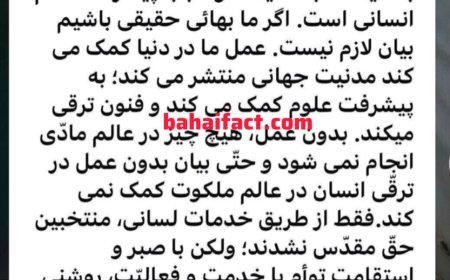
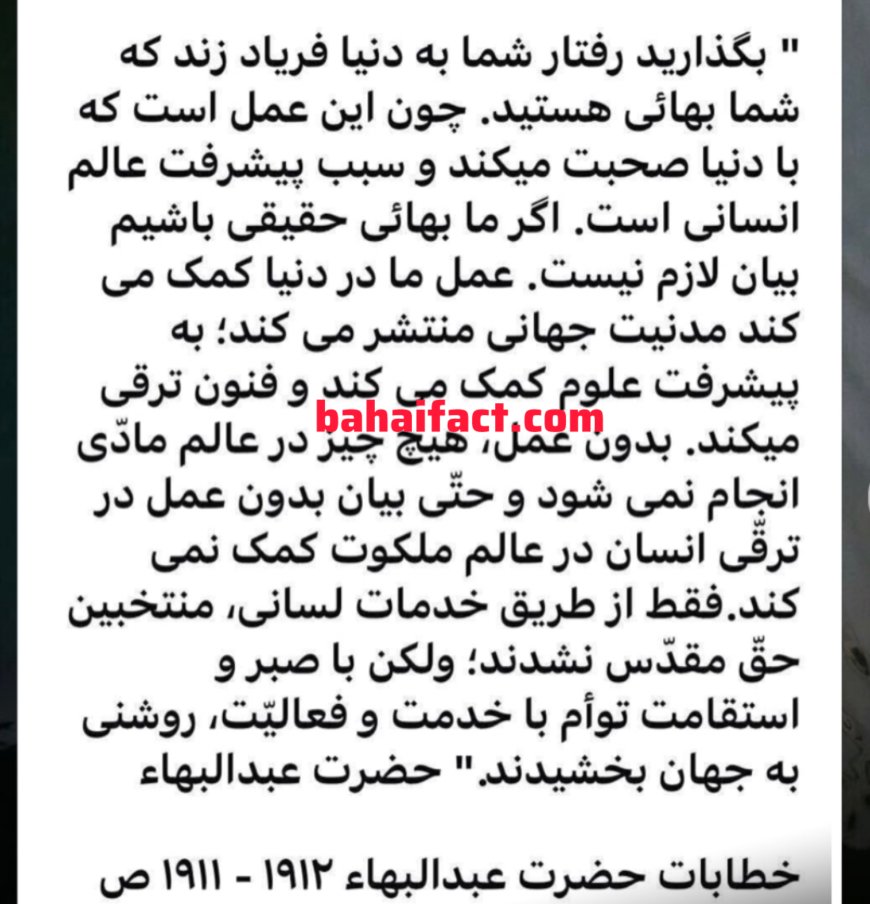
When good behavior and constant service continue, the audience subconsciously trusts the Baha'i individual. At this stage, direct propaganda is not discussed, but subtle references to “being a Bahá’í” begin. ‘Abdu’l-Bahá’s famous phrase is relevant: “Let people know by your actions that you are a Bahá’í” — that is, silent propaganda, but with the aim of mental influence.
Stage Three: Covert Guidance to the Sect’s Ideology
When trust and dependence have reached their peak, the Bahá’í identity is revealed and the same morality is introduced as a document of the sect’s legitimacy. Here, service and morality are no longer the goal; they are rather a means of legitimizing the sect’s message. The mind of the audience, whose resistance has decreased, more easily accepts the ideological content.
Why is this method dangerous?
Deceptive cover: universal values such as service to humanity, as a mask for ideology.
Reduced mental resistance: Silently passing through the audience’s psychological filters.
Gradual penetration: Slow but deep penetration until a complete change of attitude.
The soft influence of Baha'is under the guise of morality is a clear example of propaganda disguised as a means of changing society's attitudes. Recognizing and exposing it is the first step in confronting the spread of the sect in the social and media space.
What's Your Reaction?
 Like
0
Like
0
 Dislike
0
Dislike
0
 Love
0
Love
0
 Funny
0
Funny
0
 Angry
0
Angry
0
 Sad
0
Sad
0
 Wow
0
Wow
0