


Baha'i International Community of New York; Appointment of New Senior Representative and Behind the Scenes of BIC's Role at the UN
What does the appointment of the new senior representative of the Baha'i International Community in New York mean? A revealing examination of the BIC's role in the UN, the discourse of human welfare, global governance, and lobbying against Iran
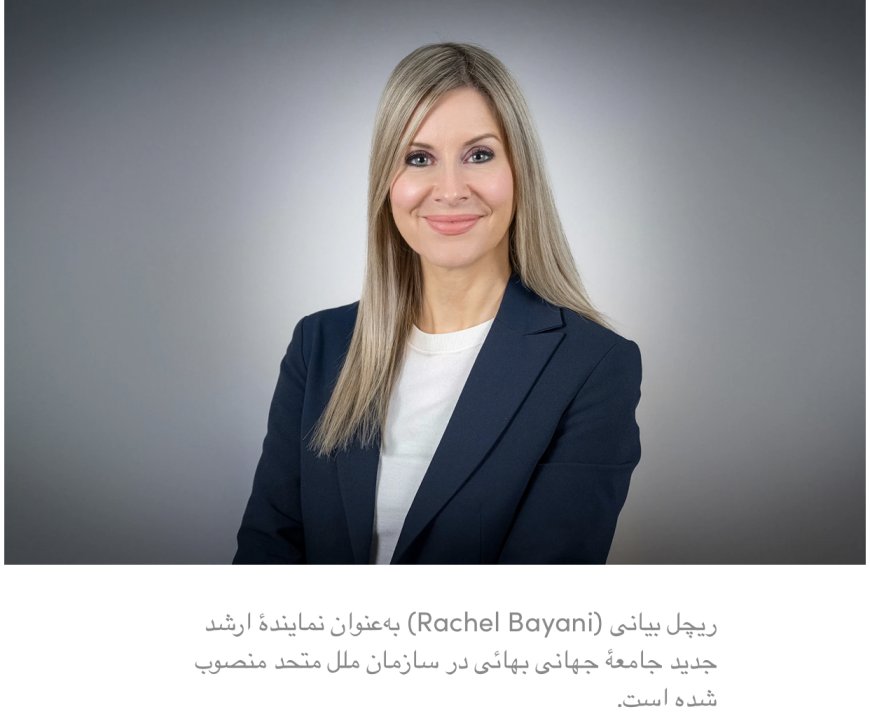
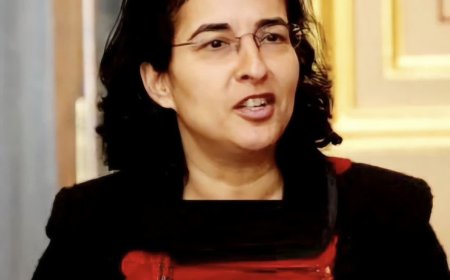
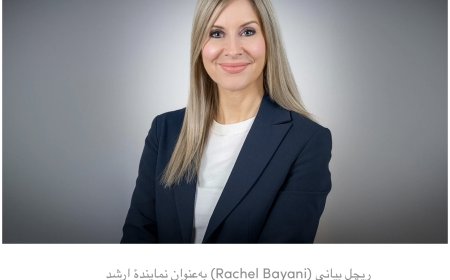
The appointment of Rachel Bayani as the new Senior Representative of the Baha’i International Community to the United Nations is presented as a mere managerial change in a religious institution; however, an examination of the structure, history, and discourse of the Baha’i International Community (BIC) shows that this shift has been carried out in line with an organized project for soft influence, human rights lobbying, and the redefinition of concepts such as “future,” “human welfare,” and “global governance” within the framework of sectarian and political interests. This report, relying on official sources of the Islamic Republic and whistleblower websites, examines the hidden layers of this appointment…
The present security analysis is based on data, propositions, and analytical frameworks extracted from a collection of documented documents and analyses, and aims to rearrange and integrate the claims and criticisms that sources have made in attributing a political-security nature to the Baha’i organization and its international arm, the Baha’i International Community (BIC).
The starting point for this analysis is the appointment of Rachel Bayani as the new Senior Representative of the BIC to the United Nations; an event that is framed in official Baha’i discourse as a “natural managerial change” and “continuation of global service,” but in the security reading of the aforementioned sources, it is interpreted as part of a structural and purposeful process of networking, reproducing legitimacy, and deepening the soft influence of the Baha’i organization in international institutions.
In this framework, the BIC is presented not as a purely religious or human rights institution, but as a cover mechanism that, through moral language, popular concepts, and humanitarian vocabulary, advances the political and sectarian goals of the House of Justice and the Baha’i global network.
From the perspective of these sources, the change of person at the head of the UN representation is a change of form, not of substance; Because the decision-making structure, discourse lines, and macro-missions are defined outside the control of individuals and at the organizational center of the House of Justice. For this reason, the focus of security analysis is not on Rachel Bayani’s personal characteristics, but on the symbolic and practical function of this appointment in the continuation of the “soft influence with a moral mask” project; a project that has been repeatedly described as a gradual, non-public, and long-term threat to national sovereignty.
Sources emphasize that the dominant discourse of the BIC is generally formed around concepts such as “the future and well-being of mankind,” “the oneness of the human species,” “global governance,” “the role of religion in society,” “youth empowerment,” and “sustainable food systems.” On the surface, these concepts have a positive moral and humanistic charge and overlap with the common literature of the United Nations and international institutions; but the security critique raised in these sources is that this overlap is the main tool of influence.
The concept of “humanity” is considered one of the key points of contradiction in this discourse. In the official literature of the BIC, “humanity” is depicted as a unified whole with a common destiny; but this claim is a form of ideological selectivity.
In this critical reading, “human” in the Baha’i discourse is ultimately reduced to “humans attributed to the Baha’i Order,” and others are considered, at best, subjects of guidance and management, not equal partners. This contradiction becomes more prominent when the Baha’i global community, while claiming to defend the welfare of humanity, in its political positions supports or remains silent about international pressures and sanctions that directly target the livelihoods and welfare of non-Baha’i peoples. From a security perspective, this duality indicates that “humanity” in this discourse is a conditional, instrumental concept, subordinate to sectarian interests.
Continuing this line of analysis, the sources under review emphasize that BIC’s engagement with issues such as “food systems,” “social cohesion,” and “youth empowerment” is not a purely charitable or developmental function, but rather part of the Baha’i community-building process on a soft and informal scale. According to these critics, focusing on youth, especially in communities facing economic and identity challenges, allows for the formation of a new generation of social actors who, without formal membership, empathize with and align with the values and organizational priorities of Baha’iism. The same pattern is also seen in the context of food systems and local development, where intervention in livelihood issues creates a network of dependency, trust, and social legitimacy for actors affiliated with Baha’i projects. From a security perspective, this process is considered a type of “silent influence” that, unlike classical political influence, lacks overt and immediately traceable actions.
The “role of religion in society” axis also has a special place in this analysis. In its statements and actions, the BIC mentions religion as a source of public morality, social cohesion, and the resolution of global crises. In the critical view of the aforementioned sources, this approach is not an impartial attempt to revive spirituality, but rather an attempt to redefine the position of religion in favor of a specific Baha’i reading. Religion in this discourse is removed from the realm of belief and the individual and becomes a tool for social management; management that must ultimately take place within the framework of the “Baha’i administrative order” and the authority of the Universal House of Justice. This is where the concept of “global governance” enters as one of the most sensitive security points.
In the sources, “global governance” is introduced as an ideological project whose goal is to concentrate social, political, and even religious wills in a transnational structure. From this perspective, the Baha’i claim that it is necessary to transcend national sovereignty and move towards global governance is not seen as an abstract pacifist idea, but rather as an intellectual platform for weakening nation-states and legitimizing the intervention of transnational institutions aligned with Western and Israeli interests. The appointment of figures such as Rachel Bayani, with a history of extensive activity in Brussels, the European Union, and institutions affiliated with the Western political order,
is analyzed in this context as a sign of the BIC’s organic connection to international power structures; a connection that, according to these sources, is not unrelated to the history of accusations regarding the Baha’i role as a “fifth column” or a means of influence in certain regional and global projects.
The security structure of the Baha’i organization is based on the principle of centralization, organizational obedience, and the elimination of individual responsibility. In this structure, individuals and representatives, even at the highest diplomatic levels, implement policies designed at the center of the House of Justice. This feature allows the BIC to benefit from the political and media consequences of its activities without accepting direct responsibility and, if necessary, to evade accountability by referring to the “individual autonomy of representatives”. In such a framework, management appointments are not considered person-centered decisions, but links in a single chain of control.
What emerges from putting these statements and analyses together is a picture in which the Bahá’í international community, relying on the language of peace, prosperity, and morality, is advancing a multi-layered project of soft influence, discursive influence, and the redefinition of fundamental concepts of sovereignty and religion. This picture, according to the sources cited, shows a community that, while claiming to be victims and demanding human rights, actively participates in the intellectual and social engineering of international institutions and, through this path, pursues its political and sectarian goals.
What's Your Reaction?
 Like
0
Like
0
 Dislike
0
Dislike
0
 Love
0
Love
0
 Funny
0
Funny
0
 Angry
0
Angry
0
 Sad
0
Sad
0
 Wow
0
Wow
0