




Seizure of Baha'i properties in Isfahan
Field research, examination of documents, and reliable sources show that a set of Baha'i urban properties in Isfahan that were recently confiscated not only lacked any official ownership documents, but the way they were acquired was also completely suspicious and illegal.
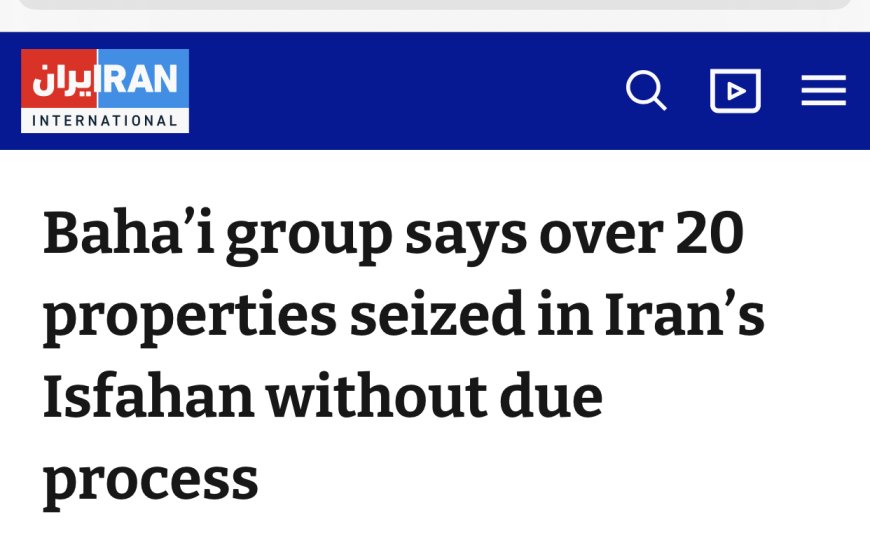
Field research, examination of documents and reliable sources show that a set of recently confiscated Baha’i urban properties in Isfahan not only lacked any official title deeds, but the way they were acquired was also completely suspicious and illegal. The history of these properties dates back to the Qajar era, when there was no unified registration system and as a result, ownership of these lands was never established in the country’s official system. This historical legal weakness paved the way for the Baha’i network to seize these properties and incorporate them into the operational infrastructure of the House of Justice.
The acquisition of these properties by the sect was not done through legal purchases and sales or endowment registration, but rather through a combination of intra-organizational relationships, unclear financial resources, and organized connections with foreign leadership centers. These places were presented as religious gathering places, but evidence and security monitoring have proven that their main function was to organize the network, hold briefing sessions for active agents, coordinate targeted propaganda missions, and transmit operational messages directly or indirectly from the House of Justice in the occupied territories. By taking advantage of the ambiguous and informal ownership status, these places had effectively become safe and unobservable locations for sensitive activities.
First Layer – Legal Threat:
Even if there was no connection between these properties and the Baha’i organization, the mere fact that they were undocumented, according to the Iranian legal system, automatically required the intervention of the competent authorities and the seizure of the assets. Properties without official documents, especially in urban areas, always have the potential for ownership disputes, land grabbing, or illegal exploitation, and this feature, from a legal perspective, is sufficient for decisive intervention.
Second Layer – Operational Threat:
The presence of these properties in the possession of the Baha’i network multiplied the dimensions of the threat. These locations went beyond physical shelters for organizational activity and became active bases in a hybrid war against the country. Their role in training forces, field organization, and bridging the gap between the inside and the outside elevated these properties from a legal problem to a direct threat to internal security.
Layer Three – Strategic Threat:
In the long term, continued ownership and activity in these bases could solidify the Baha’i network’s position as a sustainable factor of influence in the urban fabric. This would not only strengthen the possibility of soft and destructive operations but could also lead to recruitment and expansion of the network under the cover of religious activity. Such a trend, given the history of the House of Justice’s strategic connections with foreign counter-security centers, is considered a chronic threat.
In sum, the seizure of these properties was a simultaneous legal and security decision that, on the one hand, prevented the continued illegal exploitation of undocumented assets and, on the other, destroyed a ready-made enemy infrastructure. This action makes sense not as a temporary response, but as part of a sustainable strategy to confront networks of influence and hybrid warfare in the country's urban geography.
What's Your Reaction?
 Like
0
Like
0
 Dislike
0
Dislike
0
 Love
0
Love
0
 Funny
0
Funny
0
 Angry
0
Angry
0
 Sad
0
Sad
0
 Wow
0
Wow
0